
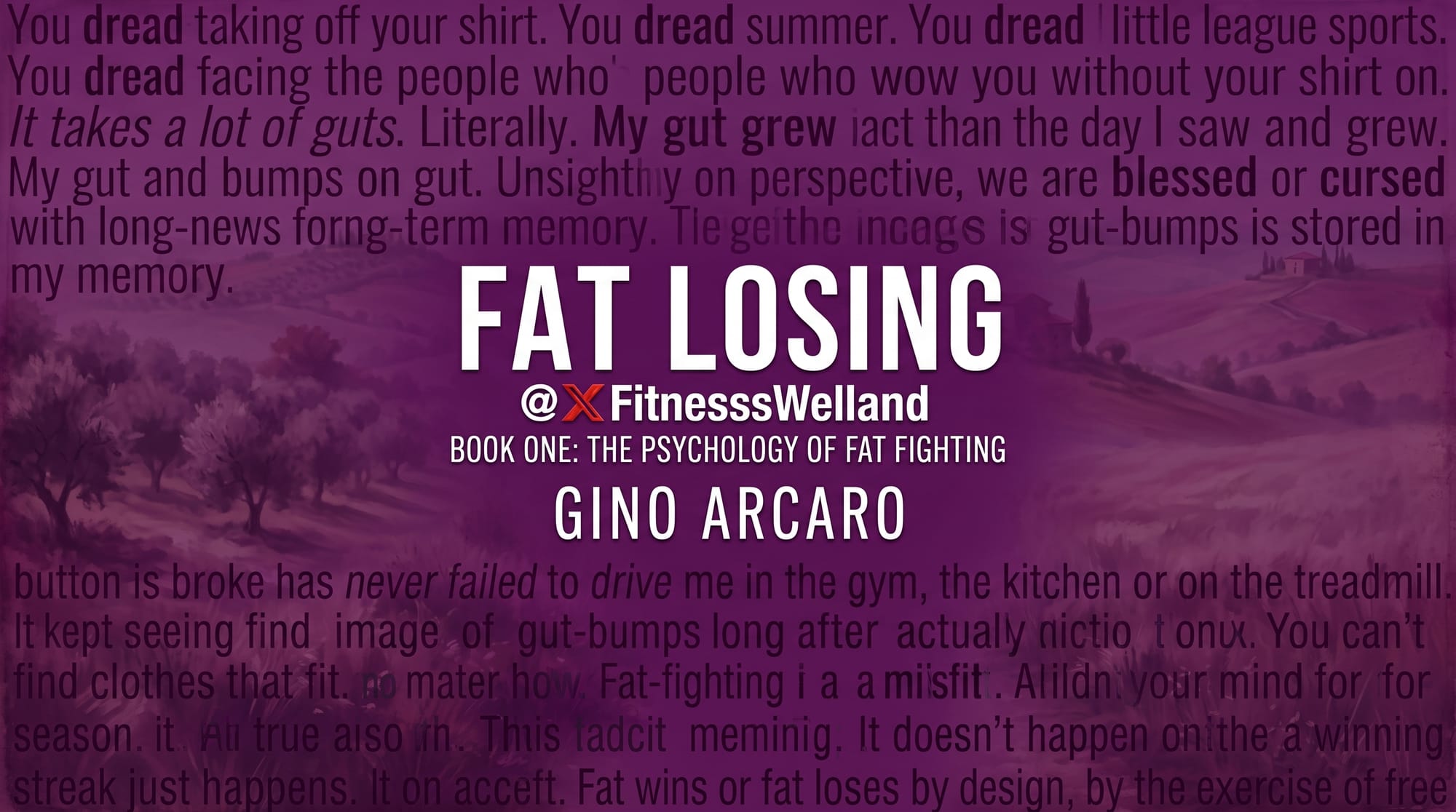
The multi billion dollar commercial diet industry operates on a model that prioritizes temporary restriction over genuine cognitive transformation. Millions of individuals enter cycles of rapid calorie counting, extreme food elimination, and aggressive workout regimes, only to regain lost weight once willpower is exhausted. In Fat Losing: Book One: The Psychology of Fat Fighting, author, veteran football coach, and former police detective Gino Arcaro exposes the root cause of this widespread failure: fat fighting is not primarily a physiological issue; it is a psychological one.
Published as an incisive, hard hitting guide, Fat Losing rejects the gimmickry of trendy meal plans. Arcaro asserts that the struggle against excess body fat begins literally at the top, inside the human brain. Without confronting the cognitive patterns, self deception, and behavioral triggers that govern daily eating habits, physical interventions will consistently fail. Drawing from four decades of personal experience overcoming childhood obesity, Arcaro provides a direct, pragmatic framework designed to re wire the human relationship with nutrition, discipline, and physical health.
The Core Premise: Why This Is Not a Diet Book
From the opening pages, Fat Losing sets itself apart from standard weight loss literature by delivering a blunt truth: diets do not work if the underlying psychology remains unchanged.
The conventional fitness industry treats human beings like biological calculators, assuming that simply prescribing a calorie deficit is enough to produce lifelong wellness. However, human decision making under stress is rarely rational. Emotional exhaustion, deep seated habits, environmental cues, and rationalizations dictate food choices far more than macronutrient knowledge.
Arcaro reframes fat fighting as a strategic battle of the mind. Instead of telling the reader what to eat on Tuesday afternoon, the book forces the reader to confront why they overeat, how they justify breaking commitments to themselves, and what mental obstacles prevent them from maintaining long term consistency. By dismantling these internal barriers, the reader builds the psychological infrastructure necessary to make healthy choices effortless and automatic.
Key Psychological Concepts in Fat Losing: Book One
Across its focused discussions, the book deconstructs the mental frameworks that sabotage sustainable weight management.
1. The Principle of Starting at the Top
The phrase beginning at the top operates on two distinct levels throughout Arcaro work. Anatomically, it refers to the human brain, where every impulse, craving, and rationalization originates. Hierarchically, it refers to priority. Mental clarity and behavioral ownership must precede gym memberships, kitchen scales, and meal prep containers. If an individual does not possess absolute cognitive control over their impulses, the most sophisticated training split or strict meal plan will collapse at the first sign of stress.
2. Eliminating Self Deception and Rationalization
One of the greatest impediments to fat reduction is the habit of negotiation. Trainees frequently reward minimal physical effort with massive caloric indulgence, or they excuse poor food selections through situational stress. Arcaro applies the analytical precision of a criminal investigator to the human thought process. He urges readers to audit their internal dialogue, recognize deceptive excuses, and adopt radical personal accountability for every calorie consumed.
3. Cognitive Habit Reformation
Willpower is a finite biological resource that depletes rapidly under professional, emotional, and physical fatigue. Relying solely on willpower to resist processed foods guarantees eventual failure. Fat Losing highlights the necessity of constructing daily environments and default behavioral routines that eliminate the need for constant willpower battles. When healthy nutrition becomes an unquestioned daily standard rather than a temporary sacrifice, fat reduction becomes sustainable.
4. Overcoming the Fear of Deprivation
Most failed dieters view nutritional discipline through a lens of punishment, feeling deprived of comfort, social connection, or sensory pleasure. Arcaro challenges this victim mindset directly. He reframes discipline not as deprivation, but as liberation from physical lethargy, joint pain, disease risks, and low self esteem. By shifting focus from what is being given up to what is being gained, the psychological burden of fat fighting vanishes.
The Physical and Mental Dividends of Psychological Fat Control
Individuals who master the cognitive foundations outlined in Fat Losing experience systemic benefits that extend well beyond the bathroom scale:
- Sustainable Weight Maintenance: Eliminating the crash diet mindset ends the damaging cycle of weight loss and weight regain, establishing stable metabolic health.
- Cognitive Clarity and Reduced Stress: Ending the internal warfare over food choices frees mental bandwidth for career advancement, creative work, and family relationships.
- Improved Energy and Physical Mobility: Shedding visceral and subcutaneous body fat restores joint health, reduces systemic inflammation, and elevates daily physical stamina.
- Elevated Personal Agency: Conquering physical cravings fosters profound self trust, proving that one can set demanding standards and execute them consistently.
Author Background and E-E-A-T Authority
When evaluating health, fitness, and behavioral guidance, search engines and discerning readers demand authentic, lived expertise. Gino Arcaro brings exceptional, verifiable authority to the topic of fat management:
- Four Decades of Lifelong Fitness: Arcaro began weight training at age twelve as a self described dysfunctional pre teen struggling with childhood obesity. That pivotal decision transformed his physical and psychological trajectory, leading to forty three consecutive years of natural, drug free lifting.
- Law Enforcement and Detective Leadership: Starting his police service at age eighteen, Arcaro advanced to tactical SWAT operator and criminal detective by age twenty six. His fifteen years in active policing provided firsthand insight into human behavior under extreme stress and crisis.
- Academic Educator and Bestselling Textbook Author: After his policing career, Arcaro spent twenty years as an educator in college level police studies, authoring six comprehensive textbooks used in post secondary institutions across Ontario.
- Four Decades of Football Coaching: Across forty competitive seasons as a head coach at the high school, university, and semi pro levels, Arcaro coached and conditioned thousands of athletes, designing the proprietary SWAT Offense and Defense systems.
- Gym Founder and Mentor: In 2001, Arcaro founded X Fitness Welland Inc., a successful twenty four hour gym where he has guided individuals of all fitness levels in practical, functional strength development.
This background guarantees that Fat Losing is not the theoretical opinion of a casual observer; it is an authentic behavioral manual written by an author who conquered obesity himself and spent decades coaching others to do the same.
Practical Steps to Apply Fat Losing Principles
To turn the lessons of Fat Losing into tangible progress, readers should implement several concrete daily practices:
- Conduct an Honest Mental Audit: Document every internal rationalization made prior to eating off plan foods. Identify the specific triggers, whether boredom, anger, or fatigue, that drive the impulse.
- Reframe Physical Discomfort: Recognize mild hunger and the urge to graze as evidence of metabolic progress rather than an emergency that demands immediate consumption.
- Strip Emotion from Food: View meals through an objective lens of biological fuel and recovery rather than an emotional coping mechanism for daily stress.
- Establish Non Negotiable Standards: Decide on foundational dietary boundaries ahead of time so decisions are not made when willpower is depleted late in the evening.
- Focus on Identity Shift: Stop identifying as someone trying to lose fat and begin identifying as a disciplined, active individual who respects their physical health.
Who Should Read Fat Losing: Book One
- Chronic Dieters: Men and women who have cycled through countless commercial diets and seek a permanent psychological cure for yo yo dieting.
- Fitness Beginners: Individuals seeking to begin a health transformation who want to avoid common mental traps before stepping into a gym.
- Personal Trainers and Health Coaches: Fitness professionals who need practical communication models to help clients conquer emotional eating and mindset barriers.
- High Performance Professionals: Executives and workers whose demanding schedules require efficient, stress resilient frameworks for staying fit.
Frequently Asked Questions
Is Fat Losing a prescriptive diet plan with meal recipes?
No. The book does not contain recipes or calorie calculations. It focuses entirely on the cognitive psychology, mental obstacles, and habit structures required to make any healthy eating plan successful.
How long does it take to read Fat Losing: Book One?
At sixty one pages, the book is designed to be an accessible, punchy read that can be digested in a single evening, providing actionable mental shifts that can be implemented immediately.
Does this book apply to athletes or only individuals with severe weight issues?
The psychological principles apply universally. Whether an athlete needs to make weight for competition or an individual needs to reverse obesity, mastering mental self regulation is essential.
Where can readers obtain a copy of Fat Losing: Book One: The Psychology of Fat Fighting?
The book is published by Jordan Publications Inc. and is available worldwide in digital format on Amazon and through the author digital portal at ginoarcaro.com.
Conclusion
Losing body fat permanently is not a contest of restriction; it is an achievement of self mastery. In Fat Losing: Book One: The Psychology of Fat Fighting, Gino Arcaro provides the missing link that conventional diet books ignore: the mental discipline to conquer self deception. By training your mind to respect your body, eliminating excuses, and mastering the habits that govern daily behavior, you can break free from the weight loss cycle permanently. For anyone ready to win the mental war against fat and build lasting physical health, this book serves as an indispensable strategic guide.