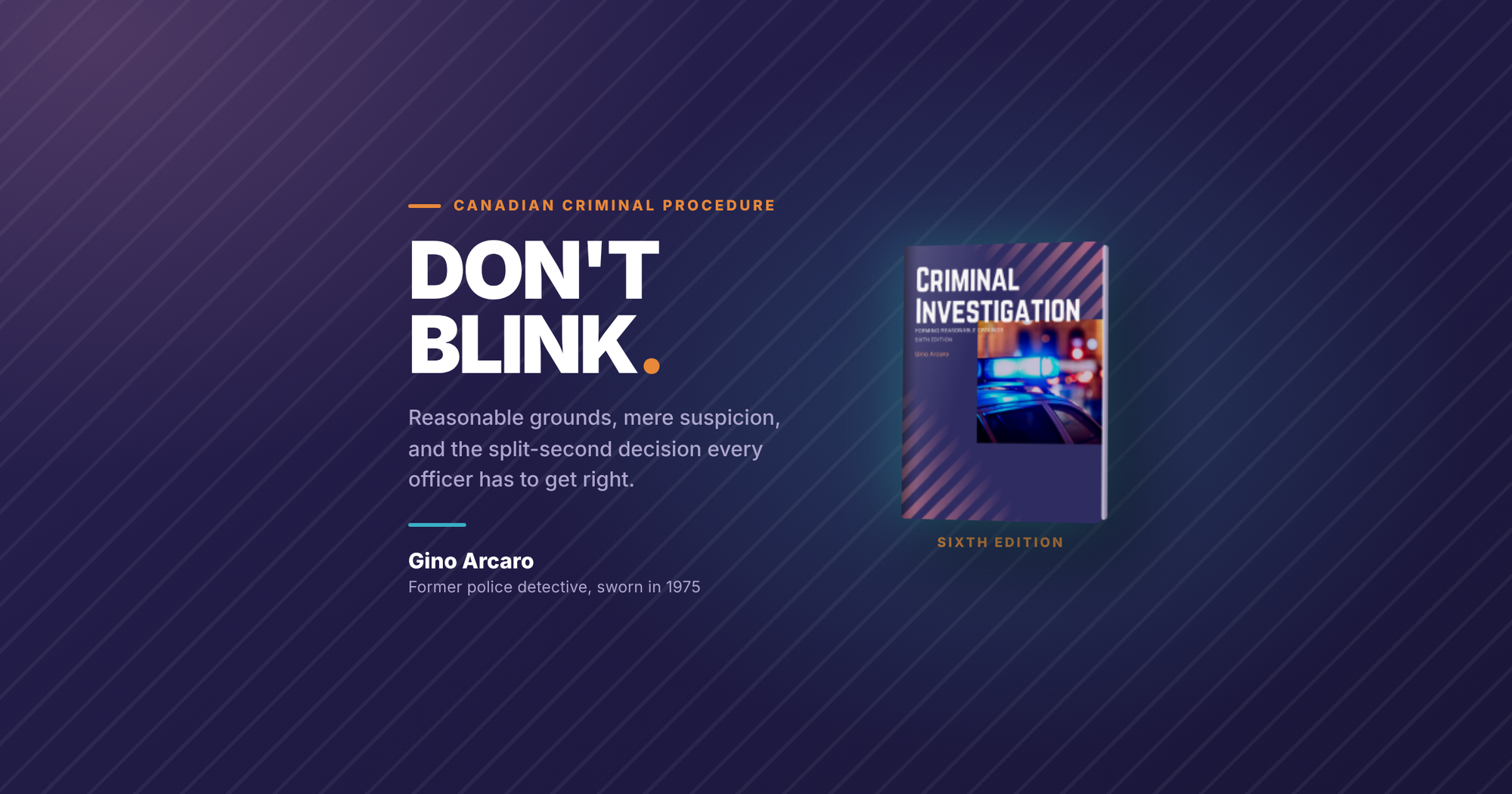

The boundary between lawful police intervention and unconstitutional state overreach hinges on a single legal standard: reasonable grounds. For front line police constables, detective investigators, and justice sector students, mastering this threshold is not merely an academic exercise. It is the core operational skill that determines whether evidence survives scrutiny in court or collapses under judicial cross examination. In Criminal Investigation: Forming Reasonable Grounds: 6th Edition, former police detective, college educator, and bestselling author Gino Arcaro delivers an exhaustive masterclass in investigative methodology.
Spanning five structured parts, fifteen comprehensive chapters, and more than seventy specialized sub chapters, this sixth edition serves as an essential manual across Canadian law enforcement. Unlike theoretical legal treatises that become detached from street realities, Arcaro bridges the divide between statutory jurisprudence and boots on the ground policing. By contrasting the subjective speculation of the public sphere with the rigorous evidentiary benchmarks required by the judiciary, Arcaro equips investigators with the technical precision needed to conduct lawful, unassailable criminal investigations.
The Operational Context: Mere Suspicion Versus Reasonable Grounds
A primary failure point in criminal prosecutions is the conflation of intuition with lawful authority. As noted by Morley Lymburner, former editor of Blue Line Magazine, the public and news media routinely operate within the realm of mere suspicion. Suspicion is instinctive, subjective, and speculative. However, inside a courtroom, mere suspicion holds zero evidentiary weight.
Reasonable grounds represent the meat and potatoes of law enforcement. To effect a lawful arrest, execute a search warrant, or seize property, an investigator must point to objectively verifiable facts that would lead a reasonable, prudent person in the officer position to believe that an offense has been or is being committed.
In Criminal Investigation: Forming Reasonable Grounds: 6th Edition, Arcaro methodically breaks down how to construct this evidentiary framework piece by piece. The text trains officers to articulate what they saw, heard, and discovered with clinical precision, ensuring their investigative notes, warrant affidavits, and courtroom testimonies satisfy judicial standards under Constitutional and Charter scrutiny.
Core Structure and Pillars of the 6th Edition
This edition introduces expanded legal analyses, contemporary judicial precedents, and real world scenarios that reflect modern investigative complexities.
1. Systematic Five Part Architecture
The textbook is divided into five cohesive parts that take the reader through the lifecycle of a professional criminal inquiry:
- Foundational Legal Authorities: Establishing the statutory powers and constitutional limitations governing police stop, detention, and arrest procedures.
- Evidence Gathering and Preservation: Methodologies for processing crime scenes, handling physical continuity, managing electronic data, and documenting trace evidence.
- Information Gathering and Witness Dynamics: Professional techniques for obtaining reliable witness statements, recognizing psychological biases, and conducting structured suspect interviews.
- Building the Reasonable Grounds Package: Synthesizing facts, informant information, surveillance logs, and circumstantial evidence into an articulable evidentiary threshold.
- Court Preparation and Trial Testimony: Drafting flawless Information to Obtain packages, organizing disclosure files, and delivering objective testimony under defense cross examination.
2. Integration of Real Life Case Studies
What elevates this sixth edition beyond conventional legal textbooks is Arcaro use of practical case studies. Rather than presenting statutory rules in isolation, every chapter grounds legal principles in real world investigations. Readers analyze actual scenarios where tactical choices, investigative omissions, and procedural delays altered case outcomes. This practical exposure teaches developing officers to anticipate evidentiary defense challenges before charges are even laid.
3. Objective Articulation and Note Taking Discipline
An investigation is only as sound as the documentation supporting it. Arcaro devotes extensive instruction to the art of contemporaneous note taking. The manual trains investigators to eliminate vague, conclusory language from their notebooks, replacing generic assertions with detailed sensory facts, precise timelines, and clear statements of observation that withstand aggressive courtroom scrutiny.
4. Navigating Informant Privilege and Hearsay Evidence
Modern investigators frequently handle complex intelligence, including anonymous tips, confidential human sources, and digital surveillance records. Criminal Investigation: Forming Reasonable Grounds: 6th Edition details the rigorous legal frameworks required to verify informant credibility, corroborate hearsay, and draft reliable judicial authorizations without violating source confidentiality or statutory rights.
Why Technical Investigative Mastery Matters for the Justice Sector
Law enforcement personnel and criminal justice scholars who master the concepts within this textbook gain measurable operational benefits:
- Trial Success and Evidence Admissibility: Ensuring that every search, seizure, and custodial statement meets constitutional scrutiny eliminates costly Charter exclusions under Section 24(2).
- Public Accountability and Officer Credibility: High standard articulation protects officers and agencies from civil liability, malicious prosecution claims, and civilian oversight complaints.
- Efficiency in Complex Inquiries: Having a structured decision making model prevents investigative tunnel vision, allowing detective units to allocate investigative resources toward genuine leads.
- Career Advancement and Promotional Success: Mastering reasonable grounds forms the baseline for sergeant, detective, and senior leadership promotional examinations across police services.
Author Background and E-E-A-T Credibility
Search engines, educational institutions, and police academies require verifiable authority when evaluating professional legal literature. Gino Arcaro brings decades of documented field experience and academic leadership to this text:
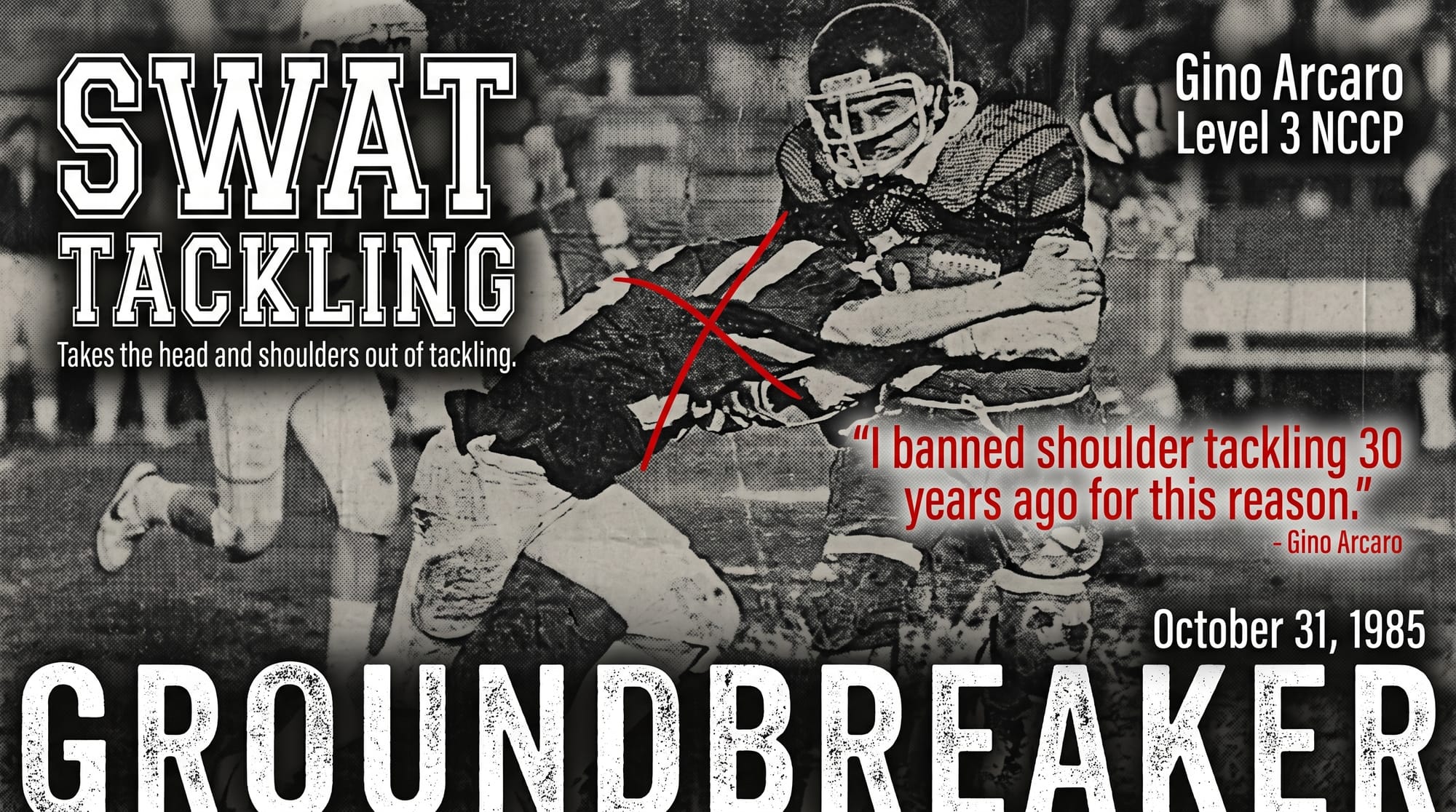
- Active Law Enforcement Service: Arcaro began his career in policing at age eighteen, earning promotion to tactical SWAT team operator and subsequently to criminal detective by age twenty six. His fifteen years on the force provided direct experience investigating serious criminal offenses and authoring high stakes warrant applications.
- Two Decades in Post Secondary Education: Following active service, Arcaro dedicated twenty years to teaching police studies and criminal justice at the college level, training thousands of modern police officers across Ontario.
- Prolific Legal Authorship: Arcaro is the author of six foundational law enforcement textbooks widely adopted across Canadian post secondary institutions, making him one of the most respected authorities in Canadian police education.
- Advanced Academic Qualifications: Arcaro holds a Master of Education degree, an undergraduate degree in social sciences, and a Level 3 NCCP Coaching certification, combining pedagogical mastery with real world operational application.
- Interdisciplinary Leadership: In addition to his criminal justice expertise, Arcaro has completed over forty three consecutive years of natural weight training, operates X Fitness Welland Inc., and founded the motivational platform Blunt Talk, bringing a disciplined, uncompromising focus to all his published works.
This background guarantees that Criminal Investigation: Forming Reasonable Grounds: 6th Edition delivers verified legal methodology vetted by decades of courtroom appearances and classroom instruction.
Practical Recommendations for Law Enforcement Professionals
To maximize the field utility of this manual, practitioners should adopt several operational habits:
- Conduct Pre Charge Case Audits: Before submitting a Crown brief, cross reference your evidentiary inventory against Arcaro reasonable grounds checklist to identify any investigative gaps.
- Refine Field Notebook Habits: Review Arcaro articulation chapters regularly to ensure your incident notes detail objective behaviors rather than subjective assumptions.
- Train for Suppress Hearings: Use the case study questions at the end of each sub chapter to conduct unit level tabletop exercises simulating defense cross examination.
- Update Warrant Templates: Continuously align warrant drafting language with the statutory tests and judicial rulings outlined in the text.
- Integrate into Field Training Programs: Field training officers should use the five part framework to evaluate recruit articulation during daily shift debriefs.
Who Should Read This Manual
- Front Line Police Officers: Constables looking to sharpen their on scene decision making, lawful detention parameters, and arrest documentation.
- Detective Investigators and Specialists: Criminal investigators preparing complex Information to Obtain packages, executing search warrants, and managing major case files.
- Police Studies and Criminology Students: Post secondary candidates preparing for recruit intake testing, Ontario police college programs, and justice sector interviews.
- Private Investigators and Corporate Security Managers: Security professionals who must gather corporate evidence while adhering to statutory continuity and legal standards.
- Legal Practitioners: Crown attorneys, defense counsel, and paralegals seeking a definitive reference on standard operational police procedures.
Frequently Asked Questions
What distinguishes the 6th Edition of Criminal Investigation from previous versions?
The 6th Edition features updated case law analyses, over seventy refined sub chapters, enhanced real life case studies, and expanded coverage of contemporary evidentiary challenges.
Is this textbook suitable for police promotion exam preparation?
Yes. The detailed breakdown of statutory authorities, legal tests, and investigative articulation makes it an indispensable study guide for sergeant, detective, and staff sergeant promotional processes.
Does the book address digital evidence and electronic warrants?
Yes. The manual covers modern evidence preservation, tracking warrants, and digital search parameters within the broader framework of reasonable grounds.
Where can purchasers obtain a copy of this publication?
The publication is available as a professional downloadable PDF directly through the author dedicated portal at arcaropolicebooks.ca, with additional author works cataloged on ginoarcaro.com.
Conclusion
The integrity of the justice system relies on the ability of law enforcement professionals to distinguish subjective suspicion from objective, verifiable evidence. In Criminal Investigation: Forming Reasonable Grounds: 6th Edition, Gino Arcaro provides the definitive standard for modern investigative practice. By combining legal rigor with practical field scenarios and proven articulation methods, Arcaro equips officers with the knowledge required to conduct thorough, lawful, and ethical criminal investigations. For any professional committed to investigative excellence, this manual represents an essential operational resource.